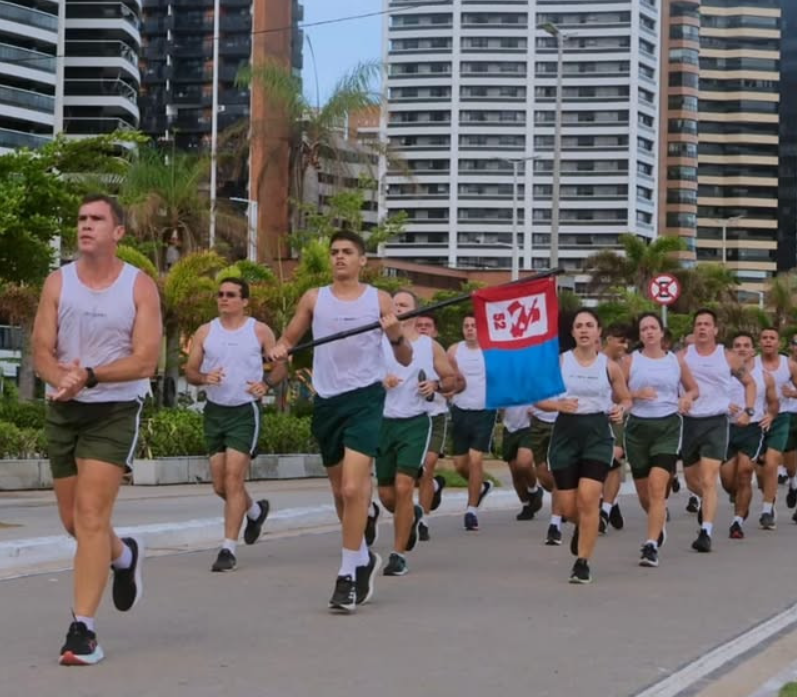
What Is the atlas military exercise brazil?
The atlas military exercise brazil refers to Operation Atlas, a major joint military exercise coordinated by Brazil’s Ministry of Defense. It brings together the Brazilian Navy, Army, and Air Force to test how effectively the country’s armed forces can plan, move, supply, and employ military capabilities across difficult operational environments, particularly the Amazon region.
Unlike a conventional training event confined to a single military base, Operation Atlas was designed around strategic mobility and interoperability. Troops, vehicles, aircraft, ships, and other capabilities were positioned from different parts of Brazil and integrated into a broader operational scenario.
The exercise is especially significant because the Amazon presents unusual military challenges: enormous distances, limited road infrastructure, navigable rivers, seasonal changes in water levels, dense vegetation, and difficult supply routes. Operation Atlas tests whether Brazil can overcome those challenges while keeping its three armed services coordinated.
atlas military exercise brazil: Quick Facts
| Category | Key Information |
|---|---|
| Official name | Operation Atlas 2025 |
| Country | Brazil |
| Coordinator | Brazilian Ministry of Defense |
| Participating forces | Navy, Army and Air Force |
| Main strategic focus | Defense and operational readiness in the Amazon |
| Core capabilities | Logistics, mobility, command and control, interoperability |
| Approximate personnel | 10,000 military personnel |
| Operational assets | About 1,200 military assets |
| Main Amazon states | Amazonas, Pará, Amapá and Roraima |
| Additional locations | Goiás and Espírito Santo |
| Main phases | Planning, strategic movement and field exercise |
Brazil’s Ministry of Defense reported that approximately 10,000 military personnel and 1,200 operational assets were involved across the wider 2025 exercise cycle.
Why Was Operation Atlas Created?
The central purpose of the atlas military exercise brazil was not simply to demonstrate military hardware. Its deeper objective was to identify weaknesses in strategic planning, transportation, logistics, command systems, and cooperation between Brazil’s armed services.
Brazil already maintains a permanent military presence in the Amazon, but operating effectively across the region requires capabilities that differ considerably from those used in densely populated or infrastructure-rich areas.
According to Brazilian defense authorities, the exercise was designed to test the strategic movement of defense capabilities from different regions toward an Amazonian theater of operations. It also sought to improve interoperability and command-and-control systems.
This makes Operation Atlas important from a readiness perspective. A military force may possess modern equipment, but that equipment has limited value if it cannot be transported, supplied, coordinated, and employed effectively when required.
How the atlas military exercise brazil Was Organized
Operation Atlas was structured around three principal phases, creating a progression from planning to movement and finally to practical field activities.
Phase 1: Integrated Planning
The first phase took place at Brazil’s Superior School of Defense in Brasília from June 30 to July 11, 2025.
Military planners worked on operational scenarios, strategic movement procedures, logistics, command and control, and coordination between participating forces. The phase was particularly important because large-scale joint exercises can fail if different services use incompatible procedures or planning assumptions.
Phase 2: Strategic Movement
The second phase focused on moving personnel and equipment toward the Amazon between September 27 and October 1.
This was one of the most demanding elements of the atlas military exercise brazil because Brazil’s military resources are distributed across a huge national territory. Moving them toward the Amazon required the armed forces to work across different transportation methods and geographic conditions.
The Navy, for example, planned activities involving movement between several major Brazilian ports, including Salvador, Belém, Itaqui, Manaus, and Fortaleza.
Phase 3: Field Exercise
The third phase involved practical activities from October 2 to October 11 in parts of the Amazon region.
The field component incorporated terrestrial, riverine, maritime, and aerial environments. This combination reflects the reality of Amazon operations, where rivers can be as important as roads and where aircraft may provide essential connectivity between isolated locations.
Where Did the atlas military exercise brazil Take Place?
The main Amazonian field activities covered Amapá, Amazonas, Pará, and Roraima. However, Operation Atlas was not restricted to those states.
Some activities occurred in Goiás, particularly at the Formosa Training Center, while another amphibious component was planned for the coast of Espírito Santo.
This geographic distribution illustrates an important feature of the exercise: the Amazon scenario was connected to military capabilities located elsewhere in Brazil.
Formosa was particularly relevant for the combined-arms component because it provided a controlled training environment suitable for larger-caliber weapons. The Brazilian Navy explained that this phase included live-fire activities and involved approximately 2,500 Marine personnel along with around 180 vehicles and aircraft.
What Military Capabilities Were Tested?
The atlas military exercise brazil tested a broad range of capabilities rather than focusing on one branch or weapons system.
Key areas included:
- Strategic transportation of personnel and equipment
- Military logistics and resupply
- Joint command and control
- Air operations
- Riverine operations
- Maritime activities
- Ground maneuver
- Combined-arms coordination
- Communications
- Operational planning
- Interoperability between the three services
The combined-arms component at Formosa also included artillery exercises, armored vehicles, infantry operations, aerial interception and ground-attack training, explosive-ordnance activities, and integrated demonstrations.
The purpose was to discover practical limitations before those limitations could become serious problems during a real deployment.
The Importance of Logistics in Operation Atlas
Logistics may be the least visible part of a military exercise, but it was one of the most important aspects of the atlas military exercise brazil.
The Amazon presents a difficult logistics environment. Roads are limited in many areas, rivers change according to seasonal conditions, and long distances increase the time and resources required to move people and equipment.
Brazil’s Navy highlighted the importance of maintaining supplies, technical support, and operational sustainment throughout the exercise.
A useful way to understand the challenge is to think beyond moving troops. A military formation also needs fuel, ammunition, food, spare parts, communications equipment, maintenance capabilities, medical support, and transportation.
If any part of that chain fails, operational effectiveness can decline even when personnel and equipment are highly capable.
Why Interoperability Matters
One of the defining themes of the atlas military exercise brazil is interoperability.
Interoperability means that different military organizations can operate together effectively. For Brazil, that involves coordinating the Navy, Army, and Air Force so that information, planning, communications, logistics, and tactical actions support a common mission.
For example, an operation involving river transport may require naval capabilities to move personnel, Army units to conduct ground activities, and Air Force assets to provide transportation, surveillance, or other support.
Training those elements separately is not enough. They must also learn how to function as one operational system.
Operation Atlas therefore provides an opportunity to expose coordination problems in a controlled environment and correct them through planning and training. Brazilian defense officials specifically identified interoperability and command-and-control improvement as major goals.
atlas military exercise brazil and Modern Weapons
Although logistics and interoperability were central, the exercise also provided opportunities to evaluate modern military systems.
During the combined-arms phase at Formosa, Brazilian Marines tested several weapons and capabilities. These included the Mistral air-defense missile, .50-caliber machine guns, the MAX 1.2 AC anti-armor missile, artillery, armored vehicles, aircraft, and remotely operated systems.
One particularly notable development was the Brazilian Navy’s first launch of the MAX 1.2 AC, an anti-armor missile developed using Brazilian technology. The Navy described the event as an important demonstration within Operation Atlas.
The significance extends beyond a single weapon. Exercises such as this allow armed forces to evaluate equipment under realistic conditions and understand how individual systems fit into larger operational formations.
What Makes the Amazon Such a Difficult Military Environment?
The Amazon is not simply another geographic theater.
Its enormous scale and environmental conditions create challenges that directly influence military planning. Personnel may have to operate far from major infrastructure, while equipment and supplies can require complex combinations of road, river, sea, and air transportation.
Seasonal river changes are another important factor. Routes that are practical during one period may become more difficult during another, requiring commanders and logisticians to maintain flexibility.
This is why the atlas military exercise brazil emphasizes movement and sustainment as much as tactical activity. The exercise effectively asks whether Brazil can rapidly concentrate military capabilities where they are needed without allowing logistical difficulties to undermine the mission.
How Operation Atlas Differs From a Traditional Military Exercise
A traditional military exercise might focus on a particular tactical scenario, such as an infantry assault, air-defense drill, naval maneuver, or amphibious landing.
Operation Atlas is broader.
Its distinctive feature is the connection between strategic planning, national-scale movement, logistics, and tactical employment. It effectively tests the chain from headquarters-level decisions to activities conducted by units in the field.
That makes the atlas military exercise brazil particularly useful for evaluating national military readiness rather than simply measuring the performance of individual units.
What Was the Role of Technology?
Technology played an increasingly important role throughout Operation Atlas.
During the simulation phase, Brazilian military personnel used modeling and simulation tools to recreate complex Amazonian scenarios before conducting activities in the field. The Brazilian Army reported that a simulation phase held in August 2025 involved roughly 350 personnel representing military commands from across Brazil.
Simulation can reduce risk and cost while allowing commanders to examine different scenarios.
It also creates an opportunity to identify weaknesses in planning before personnel and equipment are physically deployed.
Why Operation Atlas Matters for Brazil’s Defense Strategy
The broader significance of the atlas military exercise brazil lies in its emphasis on national mobility and Amazon defense.
Brazil’s Amazon region represents a major strategic area because of its size, geography, natural resources, borders, waterways, and importance to national sovereignty.
Operation Atlas does not simply train forces to fight. It develops the ability to move and sustain military capabilities in a challenging environment while coordinating multiple branches of the armed forces.
The exercise also had a practical connection to Brazil’s broader security planning. Brazilian defense publications noted that some personnel and equipment would remain available for federal security requirements associated with COP30 in Pará later in 2025.
Common Misunderstandings About the atlas military exercise brazil
Several misconceptions can arise when large military exercises receive public attention.
First, Operation Atlas was not limited to the Amazon. Some major training components took place in Goiás and Espírito Santo.
Second, it was not simply a weapons demonstration. Strategic movement, logistics, command and control, and interoperability were central objectives.
Third, the exercise involved all three Brazilian armed services. The Navy, Army, and Air Force participated in an integrated framework.
Fourth, the Amazon focus does not mean every activity physically occurred there. Certain capabilities, especially those involving larger-caliber live fire, required controlled training areas elsewhere.
Understanding these distinctions provides a more accurate picture of what the exercise was designed to accomplish.
Key Takeaways From Operation Atlas
The atlas military exercise brazil demonstrates several important lessons about modern military readiness:
- Mobility matters. Possessing military capabilities is not enough; forces must be able to reach the required theater quickly.
- Logistics can determine operational success. Personnel and equipment require continuous supplies and maintenance.
- Joint operations require interoperability. Separate services must be able to communicate and coordinate effectively.
- Geography shapes military strategy. Amazonian rivers, distances, terrain, and infrastructure directly influence operational planning.
- Simulation can improve preparation. Virtual and constructive exercises allow planners to test complex scenarios before field deployment.
- Equipment must be tested as part of a larger system. Individual weapons are most useful when integrated with command, mobility, communications, and logistics.
Final Thoughts on the atlas military exercise brazil
The atlas military exercise brazil was one of Brazil’s most ambitious joint training efforts in 2025, combining strategic planning, large-scale movement, logistics, technology, live training, and operations across land, water, sea, and air.
Its greatest value was not simply the number of troops or weapons involved. The exercise tested whether Brazil’s armed forces could function as an integrated organization while moving and sustaining capabilities across one of the world’s most demanding operational environments.
For anyone following Brazilian defense policy, Amazon security, military logistics, or South American strategic affairs, Operation Atlas provides an important case study in how a modern armed force prepares for large-scale operations under challenging geographic conditions.